Model your material from the atom to the reactor
Atlas Physics AI connects first-principles calculations, growth simulation, and reactor-scale transport into one model of how your process shapes your material, then checks every prediction against what your instruments measure.
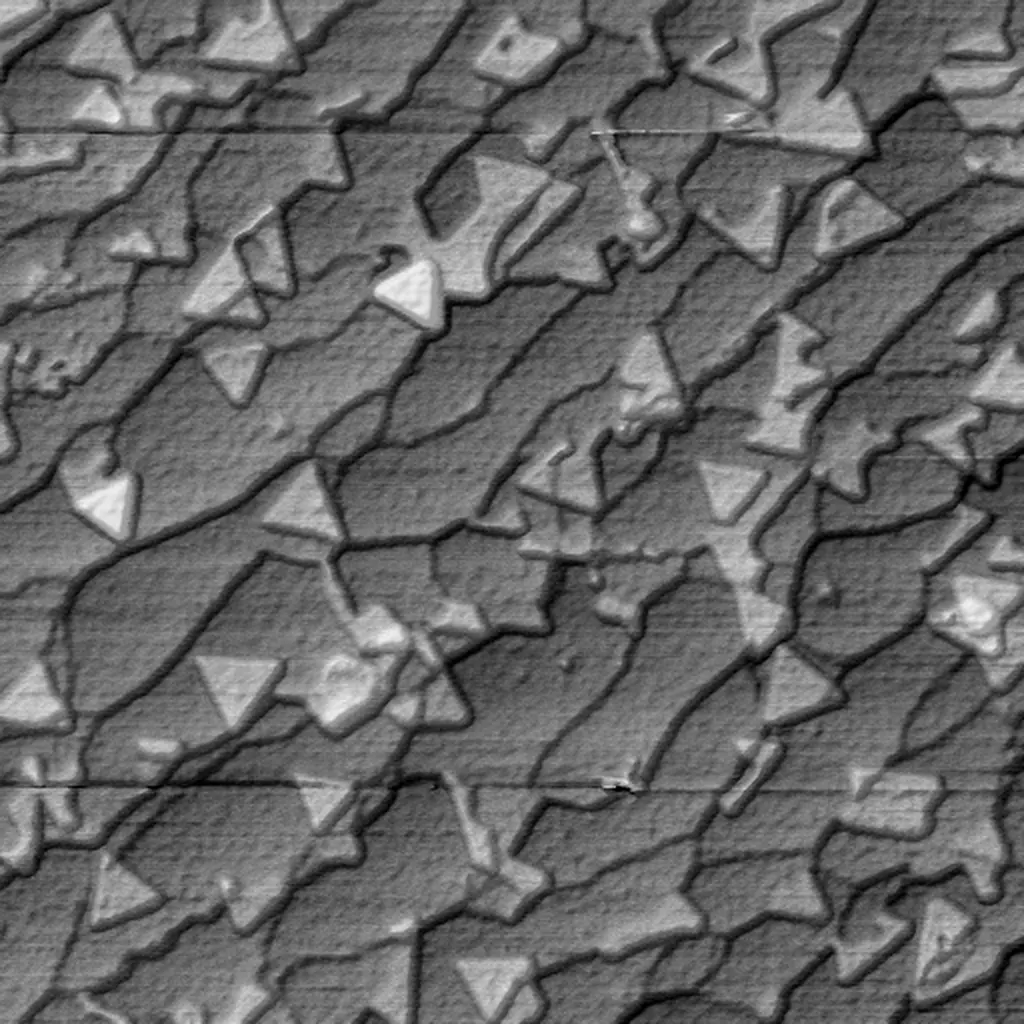
- Coverage
- 23.5%vs22.7%
- Δ +0.8 pts
- Islands per µm²
- 96vs82
- Δ +17%
Recommended next run
Predicted by the model matched to this scan
- Hold growth at 700 °C longer10 → 14 minCoverage 23% → 41%, islands grow toward coalescence
- Cut W precursor flux during nucleation−20%82 → 64 islands per µm², each about 2.5× larger
A simulated WS₂ growth run beside the AFM scan it is checked against. The scan and its segmentation are measured; the simulation is illustrative.
Three scales, connected
Each scale answers a different question
No single model spans the atom to the reactor. Atlas Physics AI runs one per scale and passes what each learns to its neighbors: rates out from the atom, flux in from the reactor.
01
Atomistic
Å to nm · fs to ps
Which defects form, how fast atoms move, and what each one looks like to a spectrometer.
DFT and machine-learned potentials
02
Meso
nm to mm · µs to s
How nuclei form, how domains grow and merge, and where defects end up.
Kinetic Monte Carlo growth
03
Continuum
mm to wafer · s to min
What every point on the wafer sees, and how that changes with reactor settings.
Reactor-scale gas flow, heat, and depletion
Every model states what it is calibrated against and what it is not. A model that has not been tied to your reactor says so, rather than presenting its output as a recipe. How to read our physics
Closing the loop
Every prediction is something you can measure
Atlas Physics AI and Atlas Metrology share one record. A model's prediction and the measurement that tests it sit on the same sample, so you can see where the model holds and where it needs another look.
Scale
Atlas Physics AI predicts
Atlas Metrology measures
Atomistic
Predicts: How each defect broadens and shifts the Raman modes
Measures: Raman linewidth turned into a defect density, with calibration limits
Meso
Predicts: Domain size, coverage, and how they move with temperature
Measures: AFM flake and grain segmentation, coverage, and roughness
Continuum
Predicts: Center-to-edge uniformity across the wafer
Measures: PL and Raman maps that show where quality actually drifts
Fewer runs to the window you want
Trial and error walks the process landscape one reactor run at a time. A model calibrated on your data narrows the search first, so each run tests a sharper hypothesis.
- Reactor runs to the optimum window
- 3vs13Δ −10 runs
- Runs spent below Q 0.3
- 1vs7Δ −6 runs
Q is normalized Raman quality; 3.2 cm⁻¹ E₂g linewidth at the optimum.
Illustrative landscapeThe surface and both searches are drawn to show the difference, not taken from a measured campaign. Drag to rotate; hover the surface to read it.
Built for process questions
Atlas Physics AI is for teams who need to know why a process behaves the way it does, not just what came out of the reactor.
Open a new process window
Explore a new substrate, temperature range, or precursor ratio in simulation first, and spend reactor time only on the runs most likely to land.
Explain a drift
Trace a nucleation or uniformity problem to the scale it starts at, whether that is a defect energetics question or a flux gradient across the susceptor.
Screen before you synthesize
Compare dopants, alloy compositions, or defect species from first principles, then check which ones your measurements can actually tell apart.
Reproduce a published study
Start from a paper’s growth conditions, rebuild the model with its assumptions recorded, and see whether your process sits in the same regime.
How we work together
Scoped with our team, around your process
Atlas Physics AI is not a self-serve add-on. Each program is set up with our scientists for your material system and reactor. Contact us for details on scope, timelines, and pricing.
- 1
Scope
We start from the decision you need to make and find the scale the question lives at. Not every problem needs all three.
- 2
Calibrate
Models are tied to your material and your reactor, using measurements from Atlas Metrology and what the literature reports for the same system.
- 3
Decide
Results land in your Atlas workspace next to the samples and recipes they describe, with every assumption and its confidence attached.
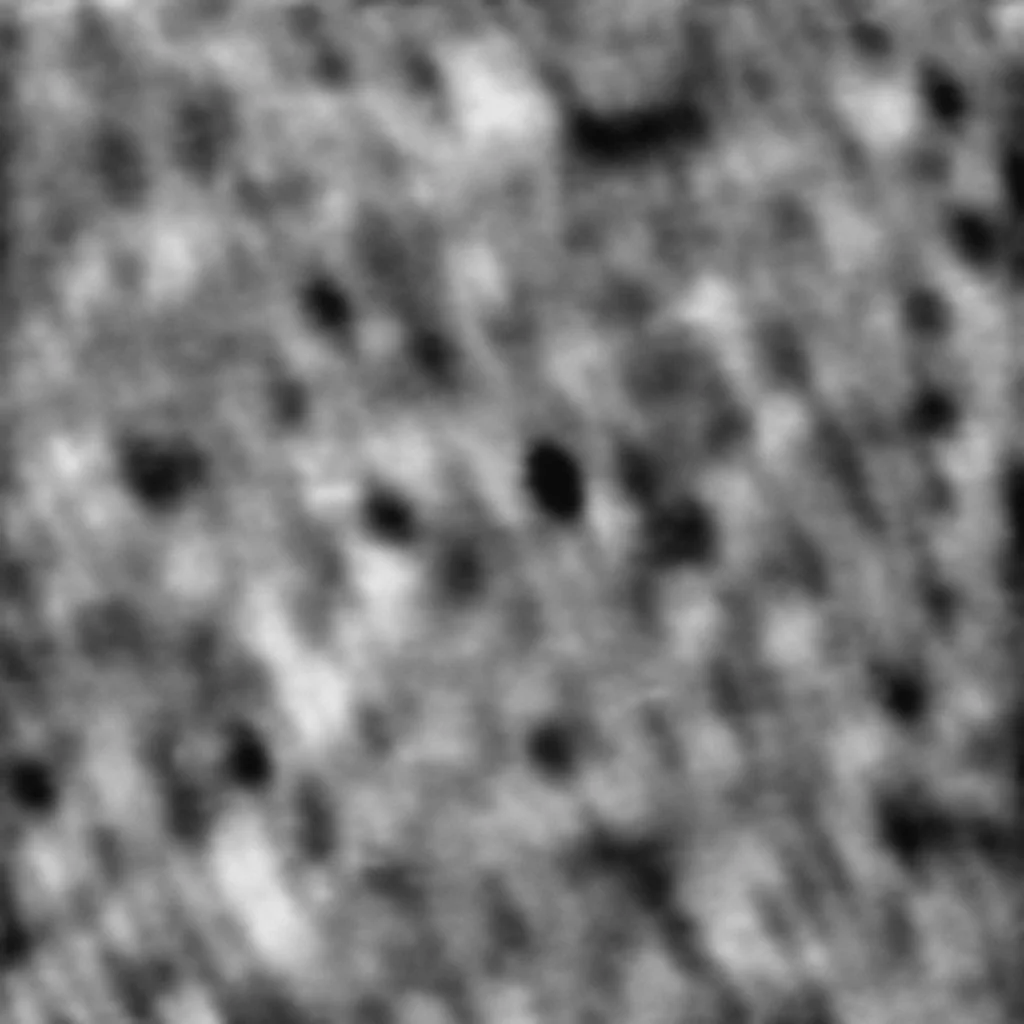
InGaN/GaN QW cathodoluminescence · Weatherley et al. 2021
Bring the question your process can’t answer yet
Tell us about the material, the reactor, and the decision it feeds. We’ll follow up to talk through which scale the answer lives at.